

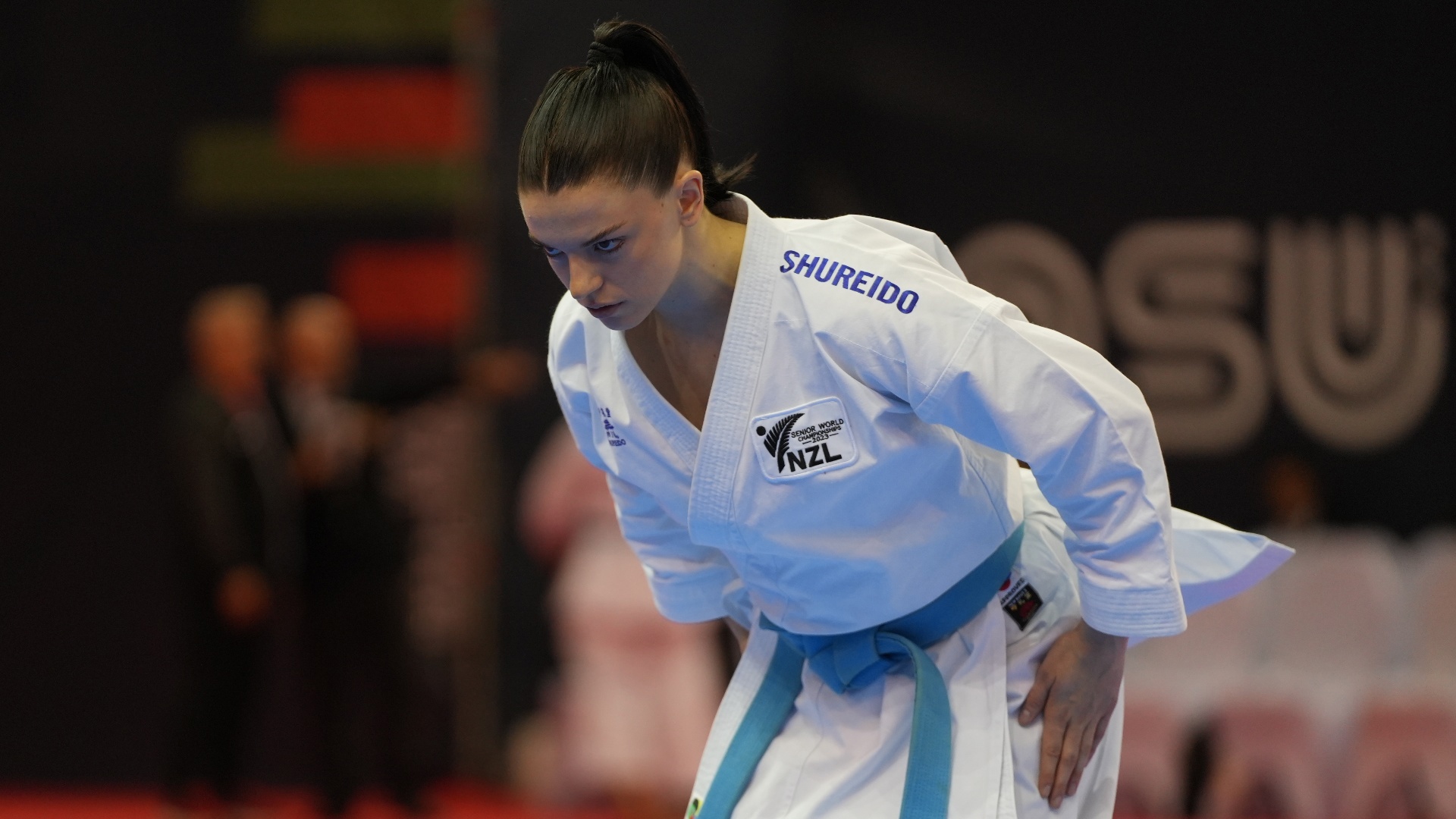
"I gave myself the space to find my love for karate again."
New Zealand karateka Holly Wigg shared emotional, meaningful words about her journey.
In a sporting culture that relentlessly demands athletes to "push through the pain" and grind without pause, New Zealand karateka Holly Wigg is offering a powerful, counter-cultural perspective on longevity, grief, and mental health.
Wigg, who began her martial arts journey at just five years old, recently opened up about a deeply personal chapter of her life—one marked by devastating loss, a temporary departure from the tatami, and an eventual, heartfelt return. Now 25, Wigg’s reflection serves as a vital blueprint for young athletes navigating the heavy burdens of burnout and expectation.
The Weight of the Gi
For many elite athletes, their sport dictates their entire identity. By the time Wigg reached her late teens, she had already spent over a decade in the dojo. It is a phase of life in which many young competitors begin to experience a fractured relationship with their sport.
"One thing I have learned is that when you are pushed to do something for too long, especially through a phase of life where it does not feel right anymore, you can slowly fall out of love with it," Wigg shared, shedding light on the silent burnout that derails many promising youth sports careers.
However, for Wigg, the pressure of the sport was suddenly eclipsed by an agonizing personal tragedy. At 18, she lost her coach—a mentor she describes as one of the closest people to her. The grief was paralyzing. The sport that had always been her sanctuary suddenly became a source of intense emotional pain.
"I took a year away from karate because I could not even put on my gi," Wigg admitted. "It hurt too much to face the sport I loved because of him, without him there."
Finding the Way Back
Rather than forcing herself to perform through the trauma—a traditional expectation in many rigid sporting environments—Wigg chose a different path. Supported by a close network of family and friends, she gave herself permission to step away.
That one-year hiatus wasn't a surrender; it was a preservation of her love for the sport. By refusing to force a connection that felt broken, the space allowed her grief to process and her genuine passion to resurface. When she finally returned to the dojo, it wasn't out of obligation to a system, a ranking, or an external expectation.
"I eventually found my way back," Wigg said. "Not because I had to. Because I wanted to."
A Lesson for the Next Generation
Today, Wigg ties her belt with a renewed sense of purpose. Every time she steps onto the mat, she does so carrying the memory of her late coach, backed by the community that sustained her, and fueled entirely by her own desire.
Her story serves as an essential reminder to athletes, coaches, and sports organizations worldwide: longevity isn't about uninterrupted momentum; it’s about resilience. Sometimes, the most courageous thing an athlete can do is pause.
As Wigg beautifully concluded, "You do not have to love something loudly every day for it to still be part of you. Sometimes stepping away is what allows you to come back with your whole heart. Do your sport on your own terms."
For Holly Wigg, karate is no longer just a sport she does. It is a place where she is, finally and entirely, 100% herself.
Written by Artificial Intelligence